
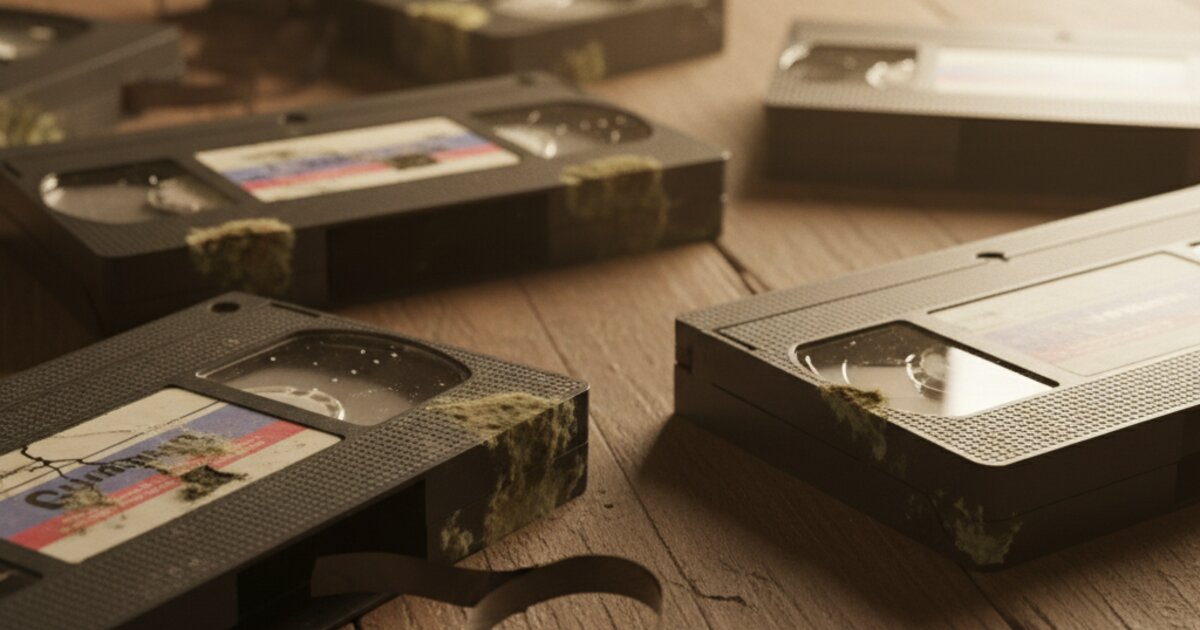
How Long Do VHS Tapes Actually Last?
The short answer is 10 to 25 years under ideal conditions. The reality is that most VHS tapes from the 1980s and 1990s are well past their expected lifespan. The magnetic oxide coating on the tape surface slowly loses its charge over time, which means the video and audio signal gets weaker with every passing year.
Storage conditions play a huge role. Tapes kept in a temperature-controlled living room will hold up much better than tapes stuffed in a hot attic or damp basement. But even perfectly stored tapes are on borrowed time. The Smithsonian Institution and the Library of Congress have both warned that the vast majority of consumer VHS tapes will become unplayable within the next decade if they are not converted to a digital format.
If your tapes were recorded in the 1980s, they are 40 or more years old. If they were recorded in the 1990s, they are 30 or more years old. Either way, you are well beyond the window where the tape manufacturer would have guaranteed the signal would hold. The question is not whether your tapes are degrading. The question is how much footage you can still save.
7 Signs Your VHS Tapes Are Degrading
You do not need any special equipment to check for tape degradation. In many cases, you can spot the warning signs just by looking at the cassette and playing it in a VCR. Here are the seven most common indicators that your tapes need attention.
1. Color Fading or Discoloration
When you play a degrading tape, one of the first things you will notice is that the colors look washed out or shifted. Reds might appear orange. Blues might look purple. Skin tones might look unnatural. This happens because the magnetic particles that store color information are the first to weaken. A tape that played back in vivid color 20 years ago may now look like a faded photograph.
2. Tracking Lines and Static
Horizontal lines rolling across the screen, white noise, or sections of static that interrupt the picture are classic signs of signal degradation. You may remember adjusting the tracking knob on your VCR to fix this. On a degraded tape, no amount of tracking adjustment will completely clear the picture because the signal itself has weakened on the tape surface.
3. Audio Distortion or Dropout
The audio track on a VHS tape degrades alongside the video. Listen for muffled voices, buzzing, high-pitched whining, or sections where the audio cuts out entirely. Audio dropout, where the sound disappears for a second or two and then comes back, is a telltale sign that the magnetic coating is separating from the tape base in spots.
4. Sticky Shed Syndrome
Sticky shed syndrome happens when the binder that holds the magnetic oxide to the tape base absorbs moisture from the air. The tape becomes sticky and literally gums up the playback heads inside your VCR. You might hear a squealing sound when the tape plays, or the tape might stop moving entirely. If you have ever pulled a tape out of the VCR and seen dark residue on the tape surface, that was sticky shed. Playing a tape with this condition on a consumer VCR can cause permanent damage to the tape.
5. Mold or White Residue on the Tape
Open the cassette shell door and look at the tape through the clear window. If you see white, green, or fuzzy spots on the tape surface, that is mold. Mold thrives on tapes stored in damp environments like basements and garages. It eats into the magnetic coating and can cause permanent signal loss. Do not attempt to play a moldy tape in your home VCR. The mold spores will transfer to the playback heads and contaminate every tape you play afterward. A professional can clean the tape before conversion.
6. Brittle or Cracked Cassette Housing
The plastic shell of a VHS cassette becomes brittle with age, especially when exposed to heat or direct sunlight. Cracked housing allows dust, moisture, and contaminants to reach the tape inside, accelerating degradation. If the cassette feels fragile or you notice cracks along the seams, the tape inside is almost certainly in poor condition. A professional can transplant the tape into a new shell if needed for playback.
7. Vinegar Smell (Acetate Base Deterioration)
If your tapes smell like vinegar when you open the case, the acetate base of the tape is breaking down. This is called vinegar syndrome, and it is a chemical reaction that cannot be reversed. The acetic acid released during this process also damages other tapes stored nearby, so one bad tape can accelerate the degradation of your entire collection. Tapes with vinegar syndrome need to be converted immediately because the deterioration only gets worse.
What Causes VHS Tape Degradation?
Understanding why your tapes are breaking down can help you slow the process for any tapes you have not yet converted. The five main factors are:
- !Heat: Temperatures above 75 degrees Fahrenheit accelerate chemical breakdown of the tape binder and magnetic coating. Attics and cars are the worst offenders.
- !Humidity: Moisture in the air causes sticky shed syndrome and promotes mold growth. Basements and garages with poor ventilation create the perfect conditions for both.
- !Magnetic fields: Speakers, motors, old CRT televisions, and even some power tools generate magnetic fields that can partially erase or scramble the signal on your tapes.
- !Age: Even under perfect conditions, the magnetic charge on a VHS tape weakens over time. This is a physical property of the medium that no amount of careful storage can prevent.
- !Improper storage: Tapes stored flat or stacked put pressure on the reels and can cause the tape to warp. Tapes without cases collect dust that acts like sandpaper on the playback heads.
Can Degraded VHS Tapes Still Be Converted?
Yes, in most cases. This is one of the most common questions Roy gets at Duplication Solutions, and the answer is almost always positive. Professional playback equipment handles tracking issues, signal weakness, and minor physical damage far better than the consumer VCR sitting in your garage.
Professional VHS decks have time base correctors that stabilize the video signal, manual tracking controls that go far beyond what consumer players can do, and heads designed to read even weak magnetic signals. Roy can also clean moldy tapes before playback and transplant tape from cracked housings into working shells. The result is often surprisingly good, even from tapes that appear to be in rough shape.
That said, there are limits. A tape where the magnetic coating has completely separated from the base, or one that has been stored in standing water, may not be recoverable. The only way to know for sure is to bring your tapes in for a free inspection. Roy will tell you honestly what can be saved and what cannot.
What to Do Right Now
If you have VHS tapes at home, here is what you should do today. First, gather all your tapes into one place. Check the closets, the attic, the basement, and any storage bins. Second, visually inspect each tape for the warning signs listed above. Look through the cassette window for mold, smell the tape for vinegar, and check the shell for cracks. Third, move all your tapes to a cool, dry room inside your home while you figure out next steps.
The most important thing you can do is stop waiting. Every month that passes means more signal loss, more color fading, and more audio dropout. A tape that could produce a good digital copy today might only produce a marginal one next year. Bringing your tapes to a professional VHS duplication service now means preserving footage while it still has a strong signal. The footage on these tapes is irreplaceable. Birthday parties, holiday gatherings, vacations, the voices and faces of people who may no longer be here. Once the magnetic signal is gone, no technology on Earth can bring it back.
Ready to save your tapes?
Call Roy at 609-588-0156 for a free quote, or fill out the contact form. Describe what you have and Roy will let you know exactly what can be done, how long it will take, and what it will cost. No pressure. No upselling.
How Roy Handles Degraded Tapes
When you bring your tapes to Duplication Solutions in Hamilton Township, Roy inspects every single one by hand before starting any conversion work. He checks the tape surface for mold, tests the cassette mechanism, and does a quick playback test to assess signal quality. If a tape needs cleaning, he cleans it. If the housing is cracked, he transplants the tape into a working shell. If the tape has sticky shed syndrome, he treats it before attempting playback.
During conversion, Roy uses professional-grade VHS decks with time base correctors that stabilize the video signal and produce the cleanest possible output. He manually adjusts tracking for each tape to get the best picture quality. After conversion, he reviews the output and edits out blank footage, dead air, and static sections so you get a clean final product. The whole process happens right here in Hamilton Township. Your tapes never leave the building and they never pass through unknown hands.
Roy has been doing this since 2008. He has handled thousands of tapes in every condition imaginable, from pristine recordings stored in climate-controlled rooms to boxes of tapes pulled from flooded basements. If there is footage left on the tape, Roy knows how to get it off. And if the tape is beyond saving, he will tell you that up front rather than charge you for a conversion that will not produce good results.
Related Reading
Once you know your tapes need attention, the next step is understanding your options. Read our guide on DVD vs USB vs Google Drive to decide which output format is right for your family. If cost is a concern, our VHS to digital cost breakdown for 2026 shows exactly what conversion costs at Duplication Solutions versus national services. For a full list of Roy's rates, visit the pricing page.
Considering a mail-in service instead? Read why you should never ship your family tapes before you decide. And if you want to see how Roy compares to specific competitors, check out our comparisons with LegacyBox, iMemories, and Walmart and CVS.
Do Not Wait Until It Is Too Late
VHS tapes lose magnetic signal every single year. The Smithsonian estimates most consumer VHS tapes will be completely unplayable by 2035. That sounds far away, but the degradation happening right now is reducing the quality of what can be recovered. A tape converted today will always produce a better digital copy than the same tape converted five years from now.
Frequently Asked Questions
Degraded VHS tapes cannot be restored to their original condition, but a professional with the right equipment can often extract usable footage. Roy uses professional-grade playback decks with manual tracking controls that compensate for signal loss, dropout, and other age-related issues. The sooner you convert, the more footage can be saved.
Store your tapes upright like books, not flat or stacked. Keep them in a cool, dry room with stable temperature, ideally between 60 and 70 degrees Fahrenheit with 30 to 50 percent relative humidity. Avoid attics, basements, and garages. Keep tapes away from speakers, motors, and anything with a magnet. Even with perfect storage, tapes will still degrade over time because the magnetic particles slowly lose their charge.
In most cases, yes. Even tapes with visible tracking lines, color fading, or minor mold can yield surprisingly good results on professional equipment. Roy will inspect your tapes and give you an honest assessment of what can be recovered before you commit. There is no charge for the inspection.
Pricing depends on the number of tapes, their length, and their condition. Call Roy at 609-588-0156 for a free quote. There are no hidden fees or surprise charges. Most customers find the cost is much lower than they expected, especially considering these are irreplaceable family memories.
It depends on how you plan to watch them. DVD is great for playing on a television with a DVD player. MP4 digital files are ideal for watching on computers, tablets, and phones, or for uploading to cloud storage like Google Drive. Roy can help you choose the right format based on how your family will actually use the recordings.